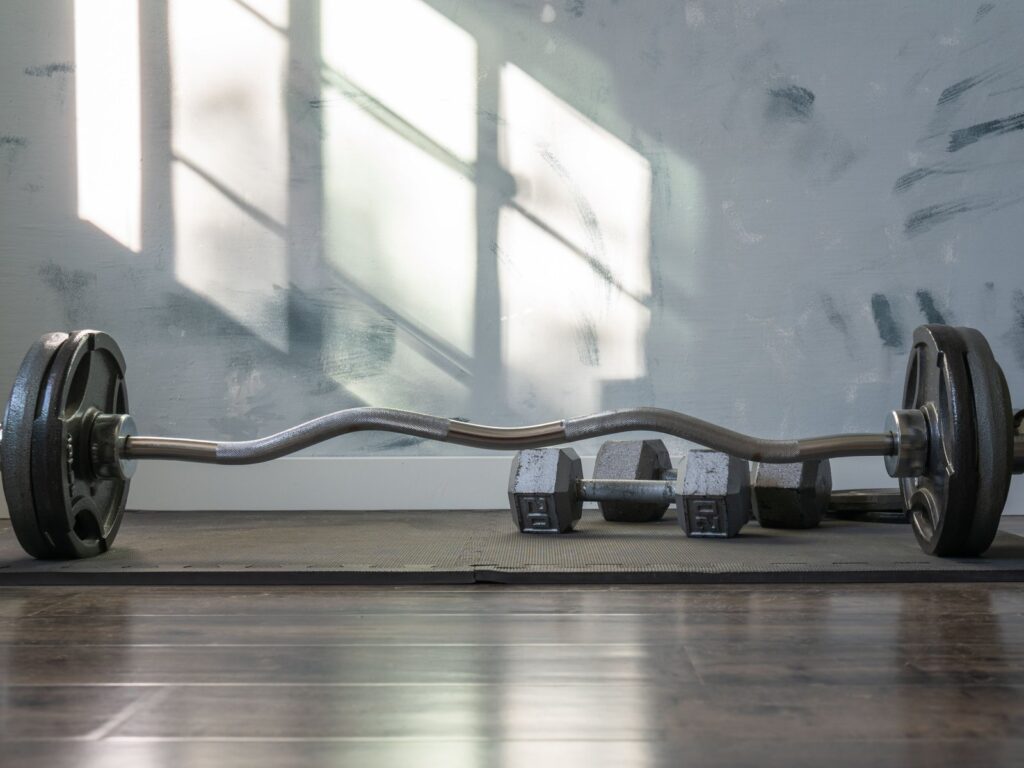
If you sit at a desk all day, drive through Karachi traffic for an hour and then spend your gym sessions on chest and arms, your upper back is probably the weakest link in your body. The barbell row fixes that. It builds the muscles between and below your shoulder blades, your lats and your grip, and it teaches you to hold a strong, flat back under load. Getting your barbell row form right matters, though, because a rounded back or a jerky, bouncing bar takes the work off your back and puts it on your spine. This guide walks you through the setup, step-by-step technique, beginner variations, common mistakes and a simple plan.
Why the barbell row belongs in your routine
Most beginner programmes are heavy on pushing: the bench press, the shoulder press and push-ups. Rows balance all that pressing by pulling your shoulders back, which helps your posture and keeps your shoulder joints happier. A strong upper back also makes your deadlift and squat more stable, and alongside pull-ups it is one of the best ways to build a wider, thicker back if you want to build muscle.
How to do a bent-over barbell row
- Set up over the bar. Stand with your feet about hip width apart and the barbell over your mid-foot, just as you would for a deadlift.
- Take your grip. Hold the bar with an overhand grip, hands slightly wider than shoulder width. Lift it from the floor with a flat back.
- Hinge forward. With soft knees, push your hips back and lean your chest forward until your torso is roughly 30 to 45 degrees above the floor. The bar hangs at arm’s length just below your knees.
- Brace. Take a breath into your stomach, tighten your abs and keep your back flat from hips to head. Look at the floor a little ahead of you rather than up at the mirror.
- Pull to your lower chest. Drive your elbows back and up, pulling the bar towards your lower ribs or upper stomach. Squeeze your shoulder blades together at the top.
- Lower with control. Let the bar return to arm’s length in about two seconds without your back angle changing, then pull again.
Breathe out as you finish the pull or at the bottom between reps. If your torso rises higher with every rep, the weight is too heavy.
Beginner-friendly variations
Rows come in many forms, and some are easier to learn than a full bent-over barbell row:
- One-arm dumbbell row. Supporting yourself with one hand and knee on a bench takes stress off your lower back, so you can focus on pulling with your back muscles. This is the best place for most beginners to start.
- Chest-supported row. Lying face down on an incline bench with dumbbells removes any chance of swinging and is kind to your lower back.
- Seated cable row. A smooth, steady resistance that is easy to learn and easy to adjust in small steps.
- Machine row. A guided path that is useful in your first few weeks or for extra volume at the end of a session.
- Inverted row. A bodyweight row under a bar set at waist height, and a great step towards your first pull-up.
Common barbell row mistakes
- Rounding your back. A curved lower back puts the load on your spine. Keep your chest proud and your back flat, and use less weight if you cannot hold the position.
- Standing too upright. If your torso drifts almost vertical, the movement becomes a shrug. Stay hinged over so your back does the work.
- Using momentum. Jerking the bar up with your hips and legs feels strong but trains very little. Every rep should start from a still, controlled position.
- Pulling with your arms only. Think about driving your elbows back rather than curling the bar. Your biceps help, but your back should lead.
- Short reps. Lower the bar until your arms are straight and pull until it touches your body. Full range builds more strength.
- Skipping the warm-up. Light hip hinges, band pull-aparts and an empty-bar set prepare your back and hips. Our warm-up routine takes about ten minutes.
How many sets and reps?
For most beginners, three sets of 8 to 12 reps with a weight you could lift two or three more times is a good place to start. Row once or twice a week, for example on a pull day or in a full-body session. Our guides on how many days a week to work out and full-body vs split workouts will help you fit it in. When you can finish every set at the top of the rep range with clean form, add a small amount of weight. That is progressive overload, the simple rule behind steady progress.
Recovery and protecting your lower back
Rows work your back hard, so give it a day of rest before training it heavily again, and avoid stacking heavy rows straight after heavy deadlifts in the same session. Good sleep and enough protein help your back recover; see our guide on how much protein you need per day and our high-protein desi diet. Some muscle soreness in your upper back after a new exercise is normal. Sharp or shooting pain in your lower back is not: stop, switch to a chest-supported or one-arm row, and speak to a coach or doctor if it continues.
Build a stronger back at Body Evolution
Body Evolution has barbells, adjustable benches, a full dumbbell range and Matrix cable and row machines, so you can practise every variation in this guide. If you want a coach to check your form and build a plan around your goals, our personal training team can help. Men who enjoy free weights can join Sparta at Solace by BE, our wellness studio: a barbell and dumbbell class on weekdays from 4 to 5 PM (book a slot by messaging us on Instagram at @bodyevolution.pk). Women can join Project Her classes or train in our private ladies gym, and anyone can build conditioning in our MMA classes. Compare memberships on our gym fees page, see why members call us the best gym in Karachi, or join Body Evolution today.
This article is educational and is not a substitute for individual medical, nutrition or rehabilitation advice. If you have a health condition, injury or specific dietary needs, consult an appropriately qualified professional.