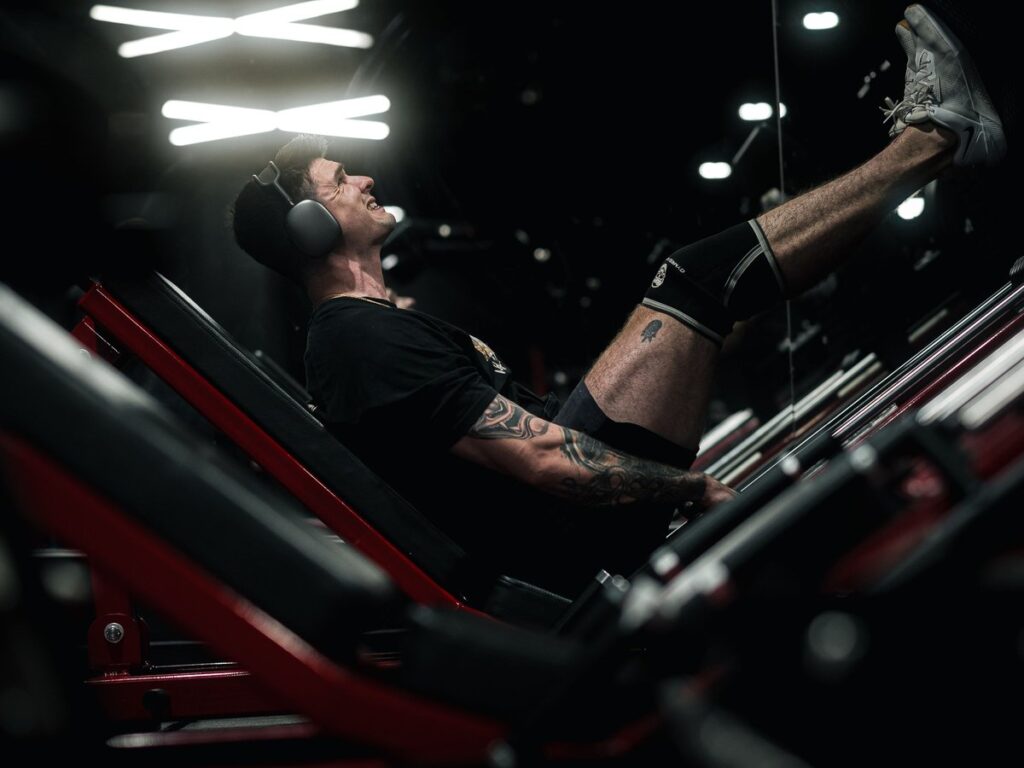
The leg press is one of the most popular machines in any gym in Karachi, and for good reason. It lets you load your quads, glutes and hamstrings heavily without balancing a barbell on your back, which makes it a great choice for beginners, for lifters working around a sore lower back, and for anyone who wants extra leg volume after squats. But it is also one of the most abused machines on the gym floor: huge stacks of plates, tiny half reps and knees caving in. Good leg press form fixes all of that. This guide covers what the leg press works, how to do it step by step, where to put your feet, common mistakes and a simple sets-and-reps plan.
What the leg press works
The leg press mainly trains your quadriceps, the big muscles on the front of your thighs. Your glutes and hamstrings help push the platform, especially when you place your feet higher, and your adductors (inner thighs) work more with a wider stance. Because the seat supports your back, the leg press puts far less load on your spine than a barbell squat or deadlift. That makes it a useful partner for those lifts rather than a replacement: squat first for strength and coordination, then use the leg press to add muscle-building volume safely.
How to do a leg press, step by step
- Set the seat. Adjust the backrest so that, at the bottom of the rep, your knees can bend to about 90 degrees without your lower back lifting off the pad. Most people start with the seat at a middle setting.
- Sit back fully. Press your hips and lower back firmly into the seat and hold the side handles. Your head stays relaxed on the pad.
- Place your feet. Put your feet flat on the platform, about hip- to shoulder-width apart, in the middle of the plate. Toes can point slightly out.
- Brace and unlock. Take a breath, tighten your stomach and push the platform up just enough to release the safety handles.
- Lower under control. Bend your knees and let the platform come towards you for two to three seconds. Keep your knees in line with your toes and your heels down.
- Stop before your hips roll. Go as deep as you can while your lower back and hips stay pressed into the seat. For most people that is around 90 degrees at the knee.
- Drive through your whole foot. Push the platform away by driving through your heels and mid-foot. Breathe out as you push.
- Do not lock your knees. Stop just short of straight legs at the top, keep a soft bend, then start the next rep. Re-engage the safety handles when your set is done.
Where to put your feet
- Middle of the platform, hip-width: the standard position. It trains your quads, glutes and hamstrings evenly and is the best place to start.
- High on the platform: shifts more work to your glutes and hamstrings and is usually easier on the knees.
- Low on the platform: puts more focus on your quads but increases knee bend, so use lighter weight and only if your knees feel good.
- Wide stance, toes out: brings in your inner thighs and glutes more.
- Single-leg press: one leg at a time with a lighter load. Great for fixing strength differences between your left and right legs.
Common leg press mistakes
- Loading too much weight: stacking every plate for a few inches of movement looks impressive but builds little muscle and stresses your knees. Use a weight you can move through a full range.
- Lower back lifting off the seat: if your hips curl up at the bottom, you have gone too deep for your current mobility. Shorten the range slightly or move the seat back.
- Locking out the knees: snapping your knees straight under heavy load is one of the main ways people get hurt on this machine. Keep a soft bend at the top.
- Knees caving in: push your knees out in line with your toes on every rep.
- Heels lifting: if your heels come up, move your feet higher on the platform and push through your whole foot.
- Pushing on your knees with your hands: keep your hands on the handles. Helping with your arms means the weight is too heavy.
- Bouncing at the bottom: control the lowering phase and pause briefly instead of rebounding off the stops.
Sets, reps and how often
For muscle growth, 3 to 4 sets of 8 to 15 reps works well for most people, with 90 seconds to 2 minutes of rest between sets. Beginners can use the leg press as their main lower-body exercise while they learn to squat, as in our beginner gym workout plan. More experienced lifters usually do it after squats or deadlifts. Training legs two times a week is plenty, whether you follow a full-body or split routine. Apply progressive overload: when you can complete all your sets at the top of the rep range with clean form, add a little weight next session.
A simple leg day could look like this: squats for 3 sets of 5 to 8, leg press for 3 sets of 10 to 12, Romanian deadlifts for 3 sets of 8 to 10, then calf raises on the leg press platform for 3 sets of 15. Pair it with upper-body days built around the bench press, barbell row and pull-ups and you have a complete week.
Safety tips
- Always warm up first, then do one or two light leg press sets before your working weight.
- Never take your feet off the platform while it is loaded, and always re-engage the safety handles before getting out.
- Stop if you feel sharp knee, hip or lower back pain. Lower the weight, shorten the range or ask a trainer to check your setup.
- Expect some muscle soreness after your first few leg days; it should fade within two or three days.
- Recover with enough protein, good sleep and plenty of water, especially in Karachi’s heat.
Train legs at Body Evolution
Body Evolution in Bahadurabad is equipped with Matrix strength machines, including plate-loaded and selectorised leg presses, plus racks and free weights for squats and deadlifts, so you can build a full leg day without waiting. If you want a coach to set your seat, fix your foot position and plan your training around your goals, our personal training team can help, and our muscle-building guide is a good next read. Men who love free weights can join Sparta at Solace by BE, our wellness studio, on weekdays from 4 to 5 PM (book a slot by messaging us on Instagram at @bodyevolution.pk). Women can join Project Her classes or train in our private ladies gym, and anyone can build conditioning in our MMA classes. Compare memberships on our gym fees page, see why members call us the best gym in Karachi, or join Body Evolution today.
This article is educational and is not a substitute for individual medical, nutrition or rehabilitation advice. If you have a health condition, injury or specific dietary needs, consult an appropriately qualified professional.