It is 6 pm, you are leaving the office, and the gym is next on the list. Do you eat something first, or train on an empty stomach and hope for the best? Getting your pre-workout meal right is one of the simplest ways to feel stronger, avoid that light-headed feeling halfway through a session and recover better afterwards. You do not need fancy powders; the food already in a Karachi kitchen does the job well.
Why eating before the gym matters
Your muscles run mainly on carbohydrates during hard training, and they need protein to repair afterwards. A sensible meal before you train tops up your energy, keeps blood sugar steady so you do not feel shaky, and gives your body the building blocks it needs once the session ends. Training hungry can work for a short, easy session, but most people lift heavier and push harder when they have eaten.
How long before a workout should you eat?
- Two to three hours before: a full, normal meal with carbs, protein and some vegetables. This suits people who train in the evening after lunch, or late at night after dinner.
- 45 to 90 minutes before: a lighter snack that is mostly carbs with a little protein and not much fat or oil, so it digests quickly.
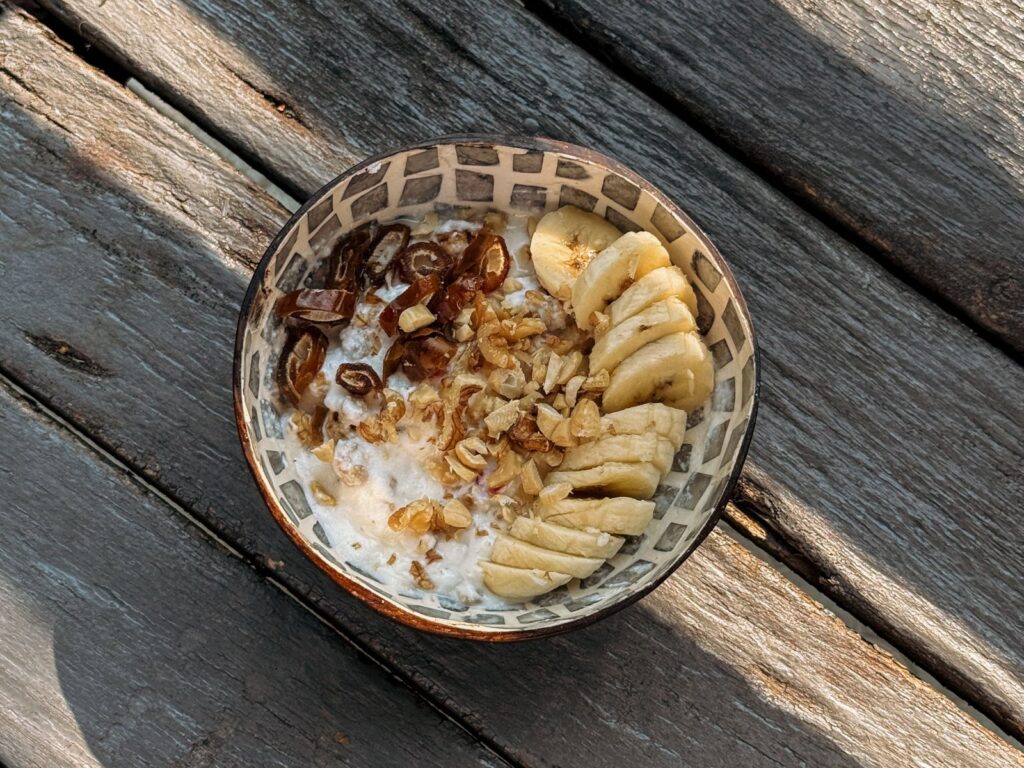
- Less than 30 minutes before: keep it very small and simple, such as a banana or a couple of dates, if you need it at all.
If you are not sure when you will be training, our guide to the best time to go to the gym in Karachi can help you pick a slot and plan your meals around it.
Easy desi pre-workout meal ideas
Full meals (two to three hours before):
- Two chapatis with chicken or daal and a side of salad
- A plate of rice with chicken salan, made with less oil than usual
- Egg bhurji with a paratha made on a dry tawa, plus a glass of lassi
- Chana chaat with boiled potatoes and a bowl of yoghurt
Quick snacks (45 to 90 minutes before):
- A banana with a small glass of milk
- Three or four dates and a handful of roasted chanay
- Two slices of bread with a boiled egg or a thin layer of peanut butter
- A bowl of oats made with milk, or plain yoghurt with fruit
For more ways to get protein in throughout the day, read our high-protein desi diet guide.
What to avoid right before training
- Oily, heavy food. Samosas, pakoras, biryani dripping in oil or a big nihari plate sit in your stomach for hours and can leave you sluggish or nauseous.
- Very spicy food. Heartburn during squats is no fun.
- Too much sugar on its own. A bottle of fizzy drink gives a quick spike and then a crash halfway through your workout.
- Trying something new. Test new foods on rest days, not before a hard session.
Do not forget water
Food is only half the picture. In Karachi’s heat and humidity, many people walk into the gym already a little dehydrated, and that alone can make a workout feel much harder. Drink a glass or two of water in the couple of hours before training and keep a bottle with you on the gym floor. Our tips on hydration for gym workouts go into more detail.
Pre-workout food for different goals
If you are trying to lose fat, you do not need to skip eating before the gym. Simply count your pre-workout snack as part of your daily food rather than adding it on top; our weight loss plan for Karachi shows how to fit it in. If you are trying to gain size, a proper meal before training and another after it makes it much easier to eat enough, as covered in our guide on how to build muscle. And if you are just starting out, pair good eating habits with our beginner gym workout plan.
Fuel up and train at Body Evolution
Not sure how much to eat for your goal? Our personal training coaches can help you match your meals to your training plan. Fighters and combat athletes can put that energy to work in our MMA classes. Women who prefer a private space can train in our ladies gym or join Project Her classes at Solace by BE, our wellness studio, with men’s classes starting soon. Compare memberships on our gym fees page, see why members call us the best gym in Karachi, or join Body Evolution today.
This article is educational and is not a substitute for individual medical, nutrition or rehabilitation advice. If you have a health condition, injury or specific dietary needs, consult an appropriately qualified professional.