You finish a great leg day, feel fine that evening, and then the next morning the stairs feel like a mountain. That stiff, aching feeling is one of the most common things new members ask us about. Muscle soreness after a workout is usually a normal part of training, and with a few simple habits you can ease it, recover faster and get back to the gym without losing momentum.
Why your muscles get sore
The soreness that shows up 24 to 72 hours after training is called delayed onset muscle soreness, or DOMS. It happens when you ask your muscles to do something they are not used to: a new exercise, more weight, more reps, or a slow lowering phase like the way down in a squat. The muscle fibres pick up tiny amounts of strain, your body repairs them, and they come back a little stronger. It is not caused by “lactic acid stuck in the muscle”, which clears within an hour or so of finishing.
Soreness is most common in your first few weeks at the gym, after a break (for example after Ramadan, a wedding season or travel), and whenever you change your programme. As your body adapts, the same workout causes far less soreness.
Is soreness a sign of a good workout?
Not really. Soreness tells you the session was new or harder than usual, not that it was effective. Plenty of excellent workouts leave you feeling only mildly tight, and experienced lifters often build muscle with very little soreness at all. Judge your progress by what you can lift, how your clothes fit and how you feel day to day, not by how much it hurts to sit down.
How to ease muscle soreness
- Keep moving gently. Light activity is better than lying on the sofa. A 20 to 30 minute walk, easy cycling or a light session for a different muscle group brings blood flow to the sore area and loosens you up.
- Sleep properly. Most repair happens while you sleep. Aim for seven to eight hours, which is easier said than done with late Karachi nights, but it makes a real difference.
- Eat enough protein. Spread protein across your meals: eggs, daal, chicken, fish, yoghurt and channay all count. Our high-protein desi diet guide shows how to hit your target without expensive supplements.
- Drink water. In Karachi’s heat you lose more fluid than you think, and being dehydrated makes stiffness feel worse. See our tips on staying hydrated at the gym.
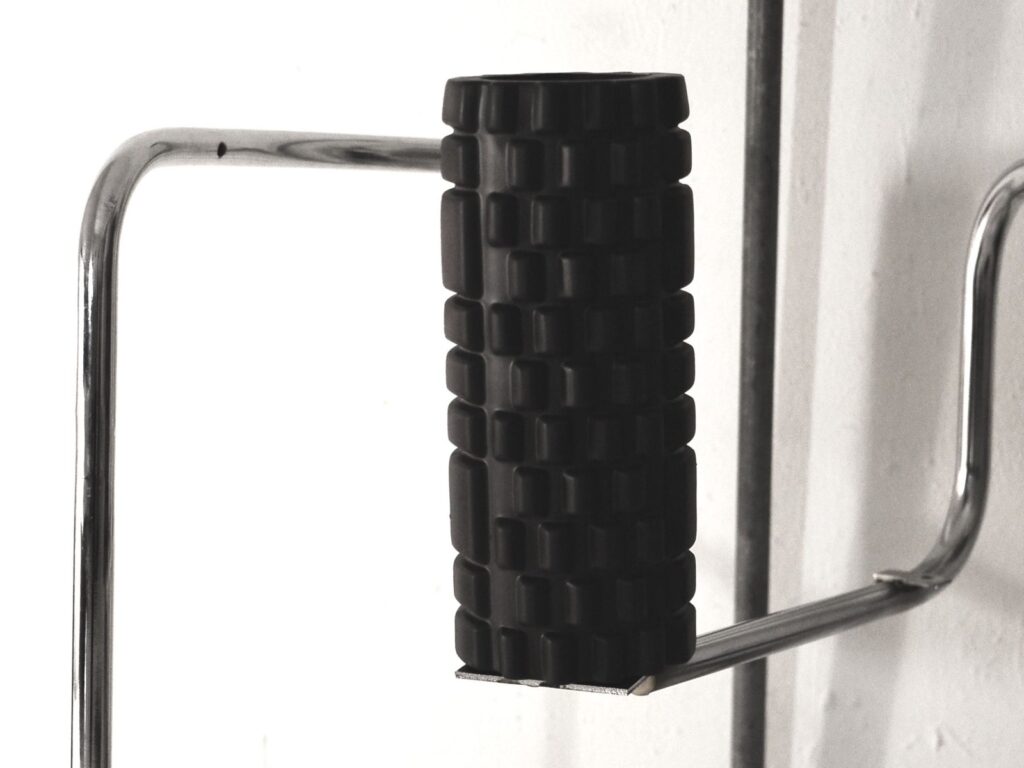
- Use a foam roller or gentle mobility work. Five to ten minutes of rolling or easy stretching will not erase soreness, but it can make you feel looser and more comfortable.
- Try a warm shower. Heat can relax tight muscles. Some people prefer a cool shower after training; use whichever makes you feel better.
Should you train while you are sore?
Usually, yes, with some common sense. If the soreness is mild, a normal session is fine and often makes you feel better once you are warmed up. If it is strong, train a different body part or do light cardio instead. A good warm-up helps a lot here; our 10-minute warm-up routine is a good place to start. This is also why a sensible weekly split matters, so one muscle group has time to recover while you train another. Our guide on how many days a week to work out explains how to plan rest days.
How to get less sore in the first place
- Start lighter than you think. In your first sessions, leave two or three reps “in the tank” on every set.
- Add load gradually. Increase weight, sets or reps a little each week rather than all at once.
- Stay consistent. Training regularly keeps soreness low. Going hard once and then skipping a week brings it back every time. Our tips on staying consistent at the gym can help.
- Follow a simple plan. A structured programme like our beginner gym workout plan builds up volume at a pace your body can handle.
When soreness is something more
Normal DOMS is a dull, spread-out ache that peaks within two or three days and then fades. Stop training that area and speak to a doctor if you notice sharp or stabbing pain, pain in a joint rather than a muscle, swelling or bruising, pain that is getting worse after three or four days, or very dark, cola-coloured urine after an extremely hard session. That last one can be a sign of a serious condition and needs medical attention the same day.
Train smarter at Body Evolution
The easiest way to avoid being wiped out after every session is to have someone plan your progression for you. Our personal training coaches set the right starting weights, check your form and adjust your plan as you adapt. Combat athletes can build conditioning step by step in our MMA classes. Women who prefer a private space can train in our ladies gym or join Project Her classes at Solace by BE, our wellness studio, with men’s classes starting soon. Compare memberships on our gym fees page, see why members call us the best gym in Karachi, or join Body Evolution and start training the right way.
This article is educational and is not a substitute for individual medical, nutrition or rehabilitation advice. If you have a health condition, injury or specific dietary needs, consult an appropriately qualified professional.