
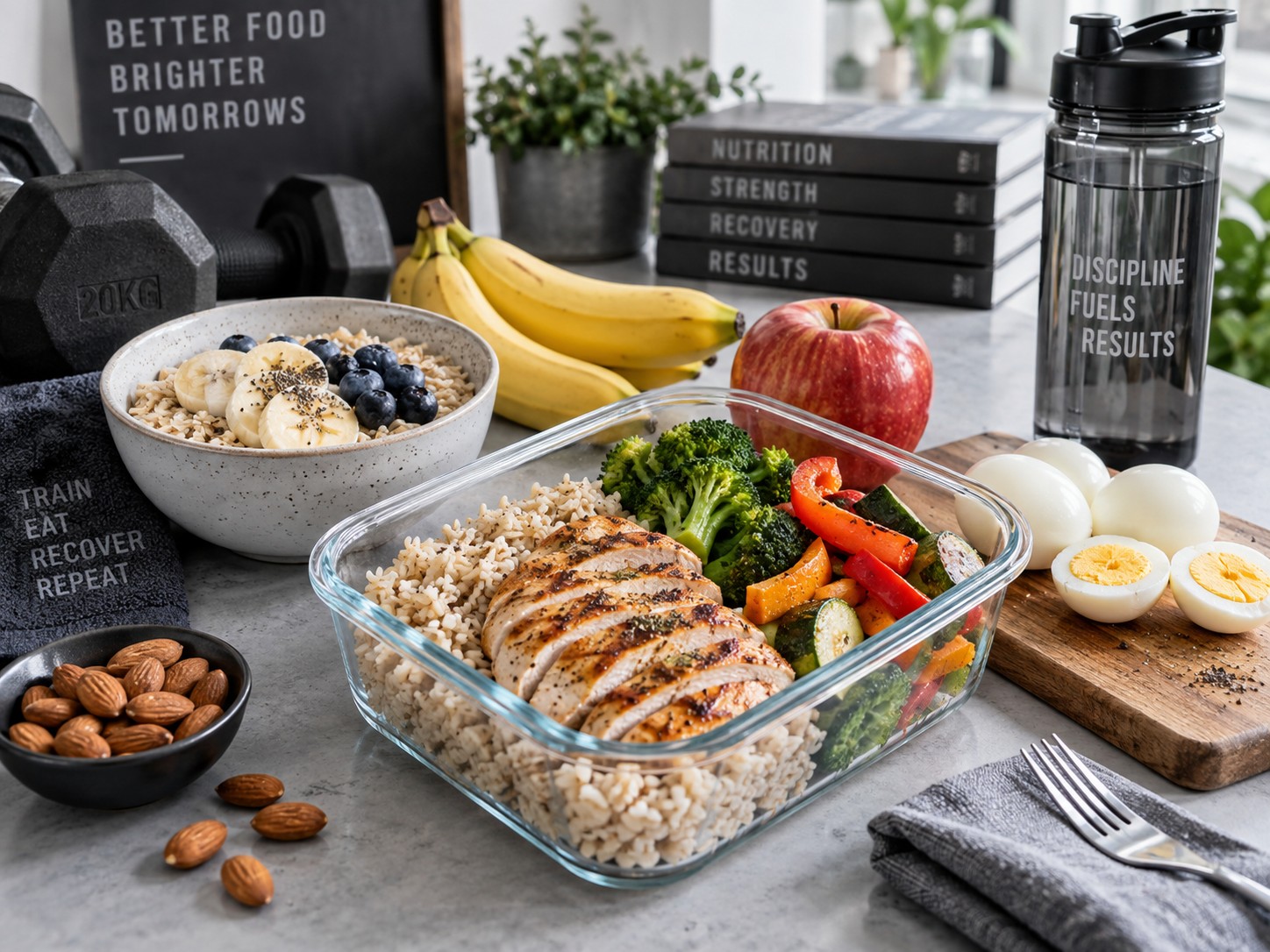
Good training nutrition does not need to be complicated. For most people, the biggest improvements come from doing a few basics consistently: eating enough protein, matching total food intake to the goal, including useful carbohydrate sources and arriving at sessions hydrated.
Protein: make it consistent
Protein provides amino acids used in repair and adaptation. Rather than relying on one very large serving, spread protein-containing meals across the day. Common options include eggs, dairy, chicken, fish, lean meat, lentils, beans and other foods that fit your preferences and budget.
Carbohydrates support hard training
Carbohydrates are an important fuel source for demanding resistance training, cardio and MMA. Rice, potatoes, oats, fruit, bread and other carbohydrate foods can be placed around training according to appetite and tolerance. There is no need to fear carbohydrates if total intake is appropriate for your goal.
Hydration affects more than thirst
Even mild dehydration can make a session feel harder. Start the day with fluids, drink regularly and pay extra attention during hot weather or long sessions. If you sweat heavily, foods and drinks containing electrolytes may also be useful.
Pre-workout meals should feel comfortable
A useful pre-training meal usually contains some carbohydrate, some protein and not so much fat or fibre that it feels heavy. The best timing is the one that lets you train without hunger or digestive discomfort.
For fat loss or muscle gain, total intake still matters
Food quality is important, but energy balance also matters. Fat loss generally requires a sustained calorie deficit. Muscle gain is usually easier when training is progressive, protein intake is adequate and energy intake is not chronically too low.
Keep the plan realistic
A nutrition plan should work on ordinary workdays, family days and busy weeks—not only on perfect days. A repeatable plan built around familiar foods will usually outperform a complicated plan that lasts ten days.
This article is educational and is not a substitute for individual medical, nutrition or rehabilitation advice. If you have a health condition, injury or specific dietary needs, consult an appropriately qualified professional.